


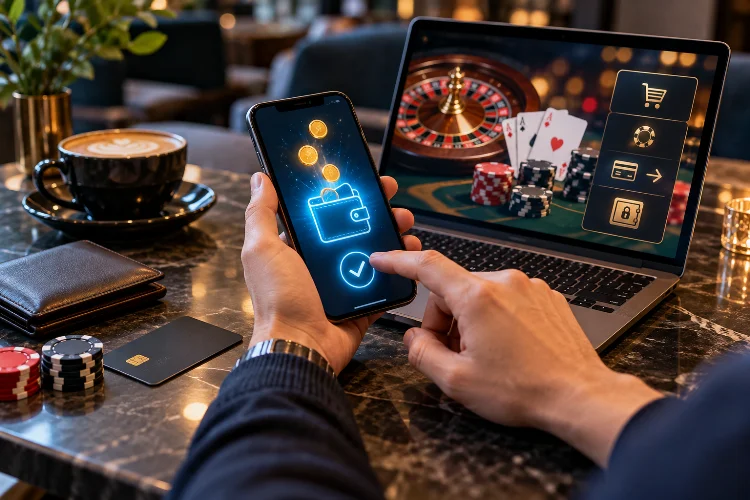
Paying an online casino no longer means typing a long card number into a cashier page. Many gambling sites now support payment options built around smartphones, digital wallets, banking apps, and other mobile-first services.
Understanding How Mobile Payment Casinos Work is easier once you separate the casino from the technology moving the money.
A phone usually acts as the secure interface, while banks, payment processors, card networks, wallet providers, or mobile carriers handle the financial transaction behind the scenes.
Which options actually appear depends on the casino, your country, and the funding source connected to your device.
What Is a Mobile Payment Casino?
A mobile payment casino is simply an online casino that allows one or more payment methods designed to work smoothly from a smartphone.
This can include services such as Apple Pay, Google Pay, traditional e-wallets, mobile banking services, or, in some markets, direct carrier billing.
These systems do not all work the same way.
Apple Pay and Google Pay commonly act as secure ways to use an existing payment method. Direct carrier billing, by contrast, can place an eligible purchase on a mobile-phone bill or deduct it from prepaid mobile credit.
The UK Gambling Commission also distinguishes e-wallets from ordinary cards, describing an e-wallet as a service that can combine different payment methods. Its consumer guidance notes that some gambling sites may support services such as Apple Pay.
How an Apple Pay Casino Deposit Works
Apple Pay does not simply hand your normal card number to the casino.
When Apple Pay is used online or inside an app, the merchant receives an encrypted payment token containing the information needed to complete the transaction.
Apple explains that this can include a device-specific account number and a one-time cryptogram rather than exposing the normal card number directly.
After you approve the payment with Face ID, Touch ID, or a passcode, the token moves through the casino’s payment provider and card-processing system.
The payment network then connects the token to the underlying card account and sends the authorization request to the issuer. The bank can approve or decline it just as it could with an ordinary online card transaction.
This means Apple Pay is mainly changing how credentials are transmitted and authenticated. It does not remove the bank or card network from the payment chain.
How Google Pay Deposits Differ
Google Pay follows a similar convenience-first idea, although its implementation is not identical to Apple Pay.
For online and in-app transactions, Google says users can choose a payment method stored in Google Wallet when the merchant offers Google Pay at checkout.
Importantly, Google does not itself hold or process the funds in these transactions; the payment ultimately takes place between the merchant and the financial institution behind the selected payment method.
So, if a casino displays Google Pay, the underlying funding source still matters.
A debit card connected to Google Wallet may be acceptable, while a credit card could be blocked under local gambling rules.
The wallet button therefore does not magically override banking or regulatory restrictions.
What Is Direct Carrier Billing?
Direct carrier billing takes a more unusual route.
Instead of using a bank card, an eligible payment is charged through the mobile-network account. Depending on the service, the amount can appear on a monthly phone bill or be deducted from prepaid mobile credit.
Boku, a major carrier-payment company, describes direct carrier billing as a mobile payment model and has deployed it alongside local e-wallet payments in multiple countries.
This type of payment has traditionally been common in digital entertainment, apps, games, music, and streaming.
Its use for real-money gambling is much more jurisdiction-sensitive.
Regulators can be concerned when phone billing effectively becomes another way of accessing borrowed funds.
The UK Gambling Commission has specifically monitored “pay-later phone billing methods” when evaluating whether consumers were bypassing its credit-card gambling ban.
That is why carrier-billing availablity at casinos can be far more limited than it is for ordinary digital purchases.
What Happens After You Tap Deposit?
Imagine choosing a £30 mobile-wallet deposit.
The casino first sends the payment request to its payment service provider. Your mobile wallet then presents or generates the payment credential needed for the transaction, and you authenticate it on your device.
The request travels through the relevant financial network to the underlying bank or issuer.
If approved, the casino can credit your account quickly even though final settlement between financial institutions happens later.
A failed deposit can happen at several points. Your issuer may reject the gambling category, the casino may not accept the underlying card, the payment provider may apply geographic restrictions, or additional authentication may fail.
A wallet can make checkout more convinient, but it cannot guarantee payment approval.
Are Mobile Casino Payments More Secure?
They can reduce exposure of certain payment credentials.
Apple Pay, for example, uses tokenization and dynamic transaction security data instead of sending the standard card number during supported transactions. Payments also require device authentication.
Google says Google Pay encrypts payment information and includes built-in security designed to help detect suspicious activity.
These features reduce some forms of card-data exposure, but they do not eliminate every risk.
You still need to check that you are using the legitimate casino website or app, keep the phone locked, protect banking credentials, and avoid approving payment prompts you did not initiate.
Mobile-payment security and casino legitimacy are two separate questions.
Why Funding Source Still Matters
This is one of the most important details to understand.
A mobile wallet can contain or represent several payment methods, but gambling regulations may focus on where the money actually comes from.
In Great Britain, gambling operators cannot accept credit-card payments for gambling. The prohibition also applies when credit-card money is routed through a money-service business or e-wallet.
The Gambling Commission says major wallet providers have systems intended to prevent credit-funded wallet balances from being used for gambling.
This means two people using the same mobile wallet may have different payment outcomes because one uses an eligible debit funding source and the other uses prohibited credit.
Can You Withdraw Through the Same Mobile Payment Method?
Not always.
Mobile deposit support does not automatically mean the same channel supports casino withdrawals.
Some wallet-based services can receive payouts, while others primarily provide purchase authorization. Apple Pay and Google Pay, for instance, are generally interfaces for underlying payment credentials rather than ordinary casino wallet accounts where winnings simply sit.
A casino may therefore ask you to withdraw through a bank transfer, card payout, e-wallet balance, or another verified method.
Identity and payment-method checks can also occur before money is released.
Always check withdrawal rules seperately from the deposit page. A payment option that produces a five-second deposit may still require a different route when money leaves the casino.
Mobile Convenience Can Make Spending Feel Faster
Fast checkout is useful, but it can also reduce the amount of friction between deciding to spend and completing a deposit.
Regulators pay attention to that effect.
UK Gambling Commission guidance on cashless gambling technologies notes that phone-based and contactless payments can be completed rapidly.
In some gambling settings, it specifically emphasises the importance of interruptions that give customers an opportunity to reconsider how much they are committing.
For online gambling, the same practical lesson is useful.
Set a deposit amount before opening the cashier instead of repeatedly topping up simply because biometric approval makes another transation effortless.
Convenience should shorten checkout – not eliminate your spending decisions.
Knowing How Mobile Payment Casinos Work helps separate the simple phone interface from the banking and payment infrastructure underneath it.
Digital wallets can improve convenience and protect card credentials, while carrier billing follows a different model entirely.
Before depositing, check the funding source, regional rules, fees, and withdrawal options. Use mobile payments for convenience, but decide your gambling budget before the first tap.
