


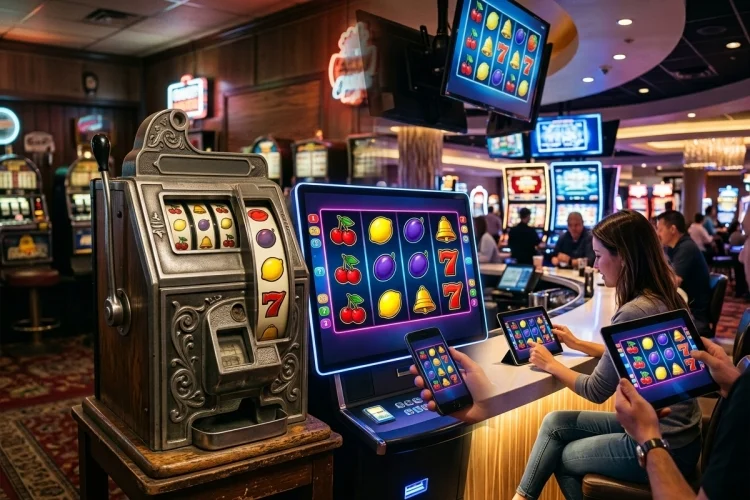
Cherries, lemons, plums, bells, and lucky sevens may look simple compared with the cinematic characters found in modern casino games.
However, these familiar pictures represent more than a colorful design choice. They connect today’s online slots with mechanical gambling machines created more than a century ago.
Fruit Slots have survived several major technological changes. Physical reels became video displays, coin slots became digital balances, and mechanical components were replaced by software.
Developers later added paylines, wild symbols, animations, and mobile controls. Despite those updates, the classic fruit-machine identity remains instantly recognizable.
Understanding that journey shows how an old casino format successfully adapted to every new generation of gaming technology.
The Mechanical Blueprint Came First
Early gambling devices used several different designs, but the three-reel automatic-payout format became especially influential. The SFO Museum identifies Charles Fey’s 1898 Liberty Bell as the first automatic-payout machine with three reels and notes that it established a standard copied by later manufacturers.
The machine used simple symbols, including card suits, horseshoes, stars, and bells. Players inserted a coin and pulled a lever, causing the physical reels to rotate before stopping on a combination.
That basic structure remains visible in many modern games: place a wager, start the reels, and compare the result with a paytable.
Why Fruit Symbols Appeared
Fruit graphics became closely associated with machines that presented themselves partly as vending devices. Marshall Fey, the grandson of Charles Fey, wrote that Mills Novelty added a gum mechanism in 1910 and used cherries, oranges, plums, and lemons to suggest fruit-flavored products.
The familiar BAR symbol is also commonly linked with gum-wrapper branding from this period. Some modern researchers question how neatly every part of that origin story can be documented, so it is safer to view it as a widely repeated historical explanation rather than a perfectly settled fact.
Whatever their precise commercial origin, fruit icons became a permanent part of slot-machine design.
From Levers to Electronic Controls
Mechanical machines depended on gears, springs, handles, and physical reel strips. Over time, electrical components allowed manufacturers to automate more functions and introduce lights, sound effects, and larger payment systems.
Video displays later removed the need for visible physical reels. Designers could reproduce the traditional spinning effect on a screen while creating more combinations than a mechanical reel strip could comfortably display.
The lever did not completely disappear. Some machines kept it as a familiar visual or physical feature, even when the internal result was produced electronically.
Software Changed How Results Were Produced
In a digital game, the displayed reels are part of the interface rather than the complete outcome-generating system. Software determines the result and then presents the relevant symbols on screen.
The UK Gambling Commission explains that gaming outcomes commonly use a random number generator, or RNG. It also notes that “random” in gaming software usually refers to pseudorandom processes designed to generate unpredictable results.
Pressing the spin button begins a new game round. Stopping the animation early does not normally allow the player to choose or improve the result.
Digital Games Added More Possibilities
Classic machines generally featured three reels and a small number of winning lines. Digital versions can support additional reels, multiple paylines, expanding wilds, multipliers, free spins, and interactive bonus rounds.
Not every fruit-themed game uses complicated mechanics. IGT continues to classify fruit games as a distinct category and describes them as simple, classic titles that often use fewer paylines. The company also offers modern fruit-themed video games with updated graphics and new mechanics.
This allows developers to serve players who enjoy either minimal layouts or more feature-heavy interpretations.
Online and Mobile Access Completed the Transition
Once slots moved into casino software, they no longer needed a dedicated machine cabinet. The same basic game could run through a website or app on a desktop computer, tablet, or phone.
Modern regulators generally treat online slots as reel-based casino games, including products with nontraditional virtual reels. Licensed remote operators may also need to meet technical, testing, and security requirements.
Convenience is one of the biggest digital changes. It also makes sessions easier to start, so spending and time limits become especially important.
What Remained the Same
The visual language has barely changed. Cherries often represent a lower-value symbol, while bells, BARs, and sevens are commonly placed higher on the paytable.
The central action also remains familiar: select a stake, spin the reels, and check whether matching symbols form a winning pattern. This simplicity helps classic themes feel accessible even when the technology behind them is completely modern.
Players should still inspect each game separately. Two titles using identical fruit symbols may have different paylines, payout percentages, volatility, and bonus rules.
Fruit Slots moved from metal cabinets and mechanical reels to screens powered by gaming software. Along the way, they gained digital balances, RNG-generated outcomes, additional paylines, animated features, and convenient mobile access.
Their cherries, lemons, bells, and BAR symbols survived because they offer an immediate visual link to classic casino history. Before playing, open the paytable and review the stake range, winning patterns, RTP, and bonus conditions.
Try a demonstration version where available and set a strict entertainment budget. Choose licensed services only where online gambling is legal, and remember that a nostalgic design does not make random results predictable.
